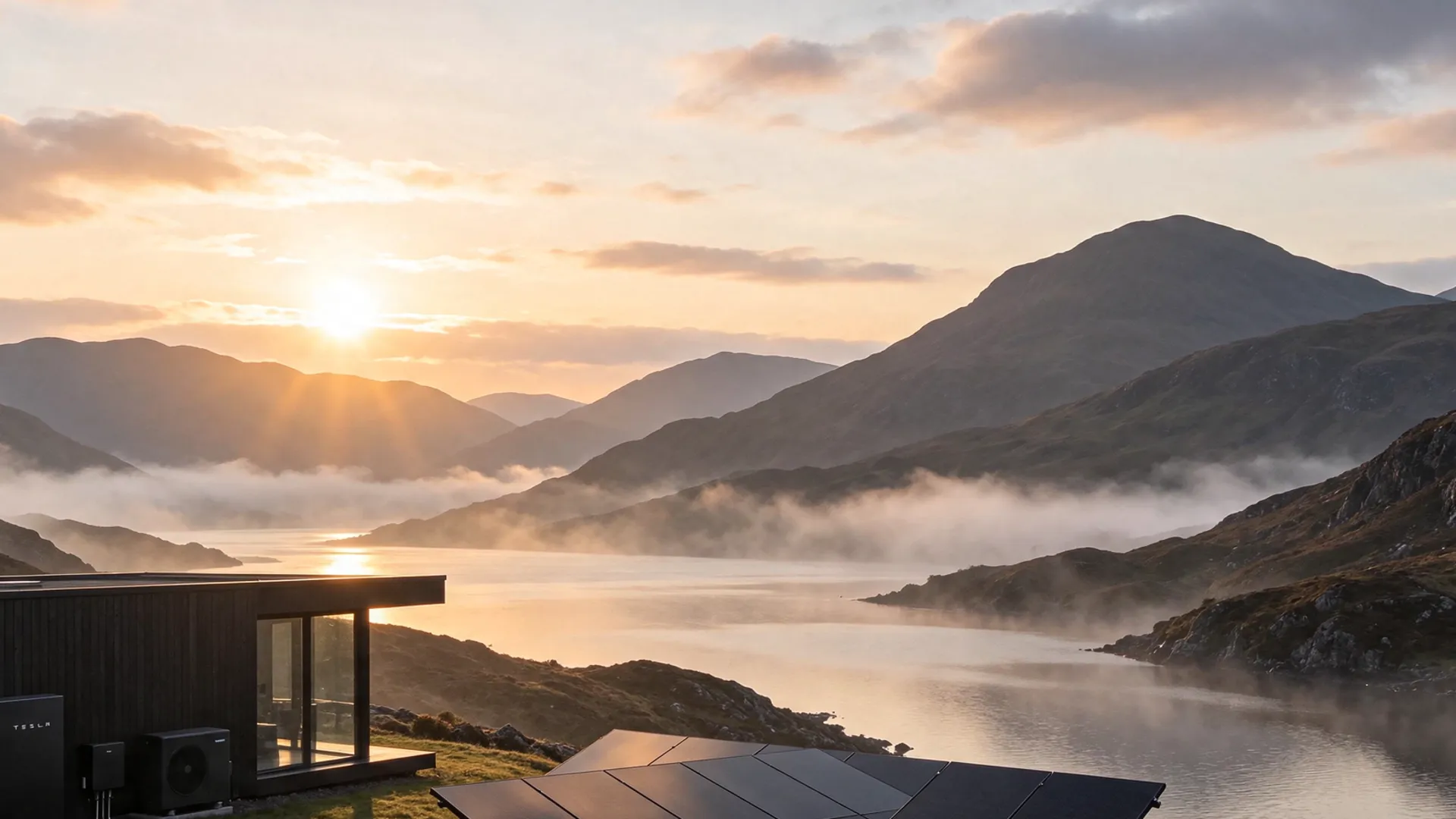
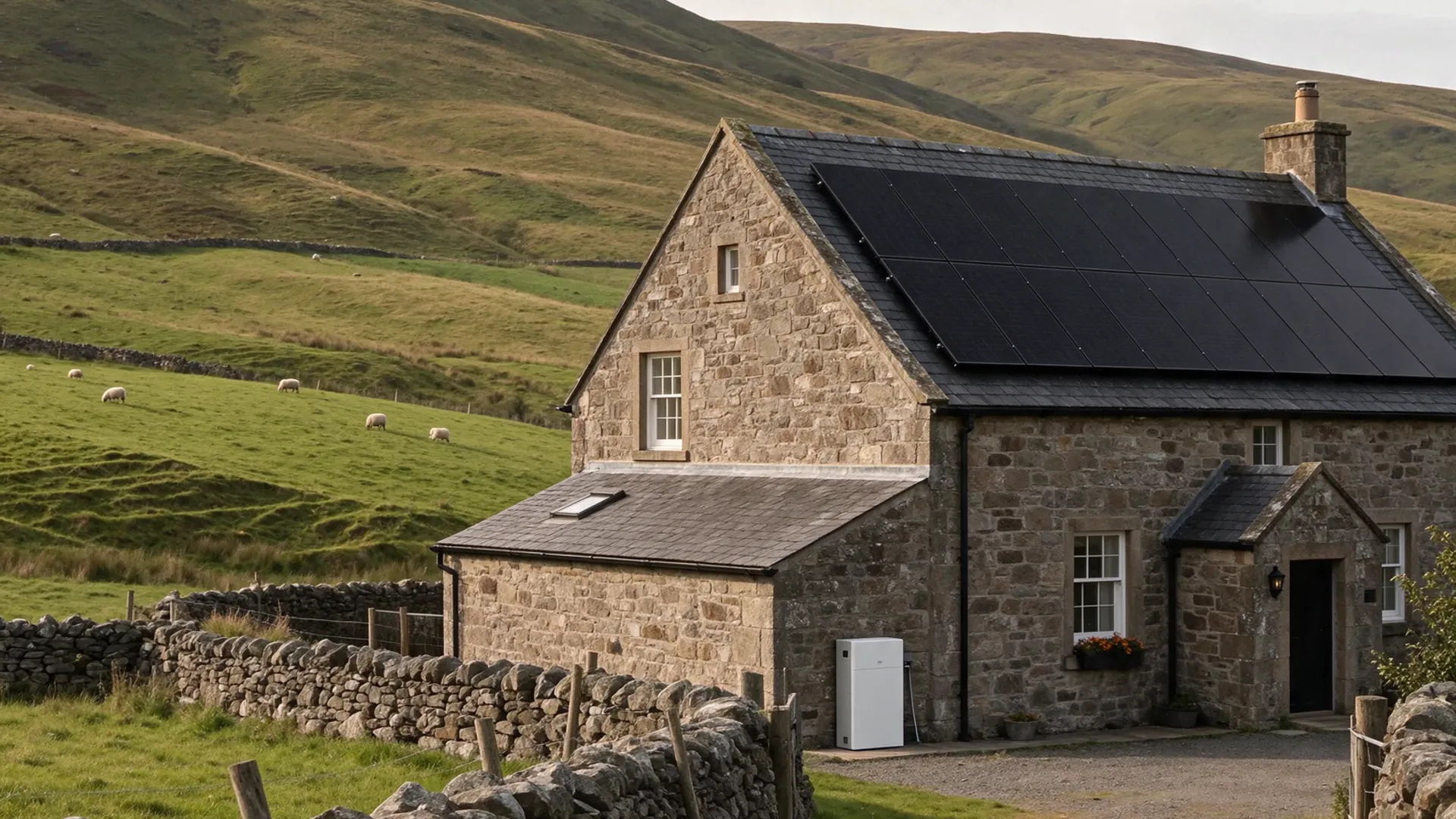
Scottish highland landscape with low-carbon heated homes
The category overview

Low-carbon heating for Scottish homes, compared plainly

Not a recommendation. A comparison, with the trade-off of each one stated rather than buried.

"The four low-carbon heating routes open to a Scottish home are an air source heat pump, a hybrid system, modern electric heating, or solar with battery storage alongside any of them. Each one trades something — disruption, running cost, or dependence on your house's fabric. The right choice depends on what your house is already like."

The options ledger

What are the low-carbon heating options for a Scottish home?

Four routes: an air source heat pump, a hybrid system, modern electric heating, or solar with battery storage. Each one carries a trade-off nobody mentions.

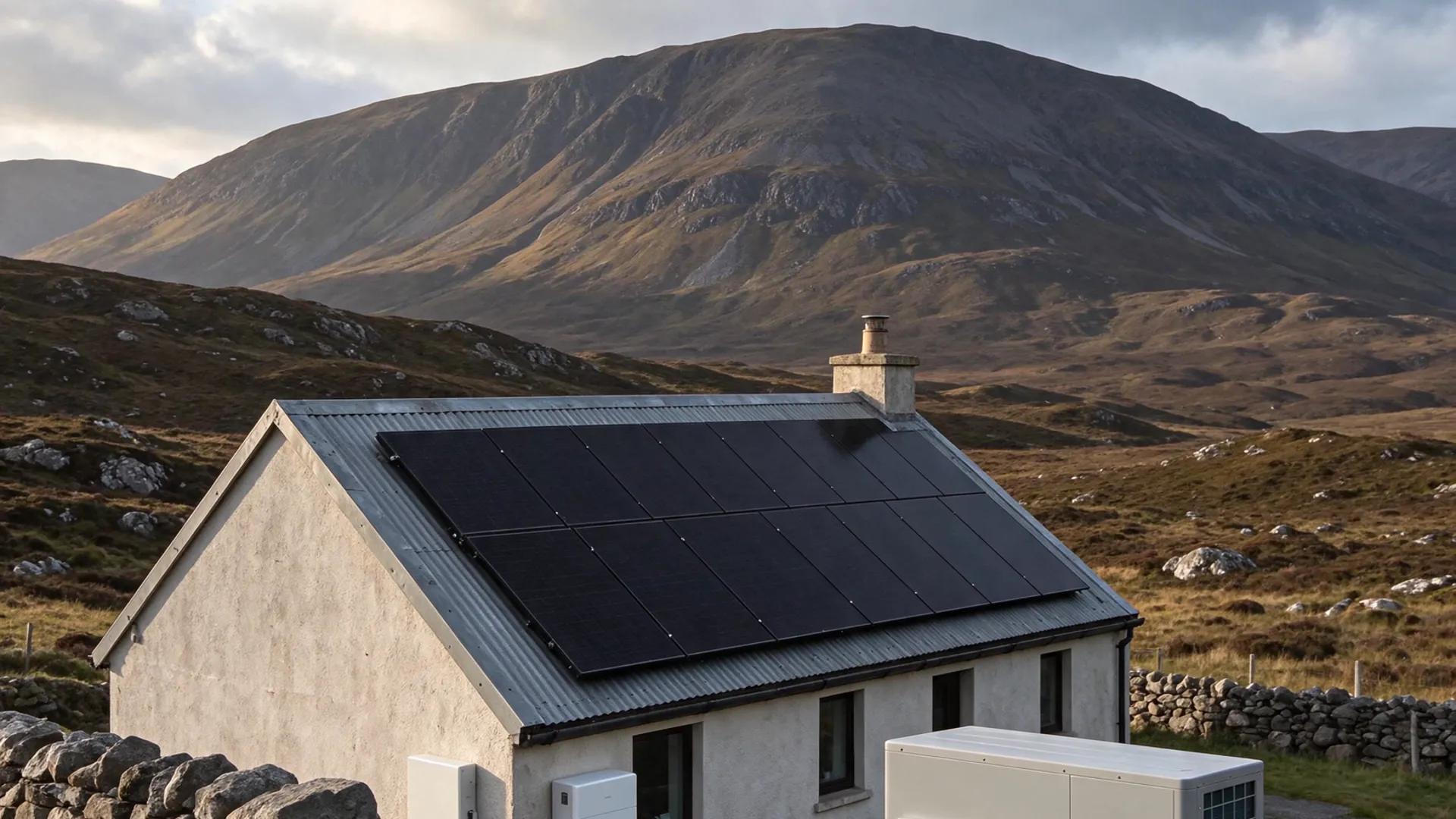
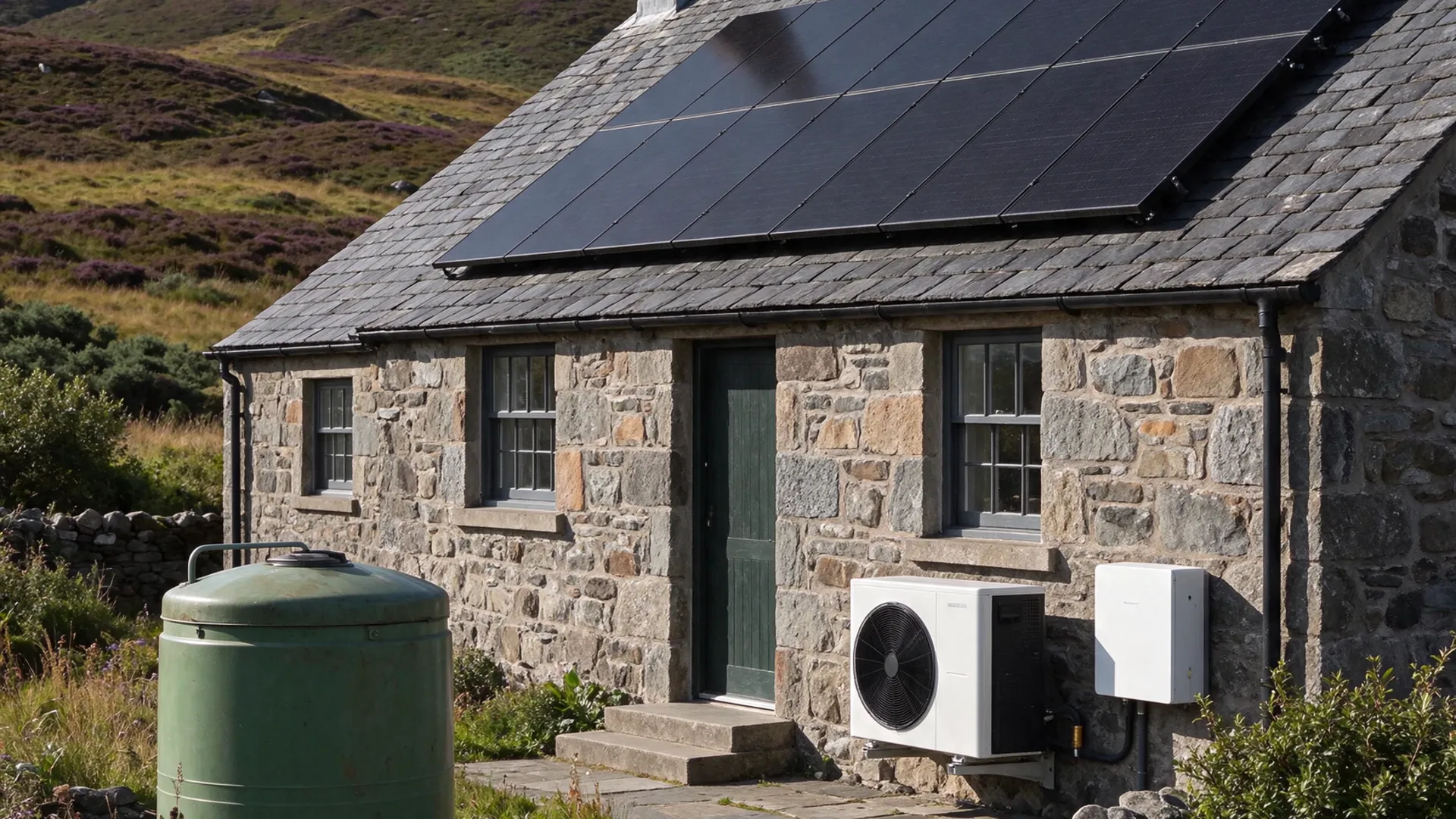
Stone cottage with a modern air source heat pump outdoor unit01

Air source heat pump

What it is
An electric unit outside the house that extracts heat from the air and compresses it to warm your home and hot water.
What the house must already be like
Needs decent fabric — insulation, draught-proofing, and a room-by-room heat loss calculation that proves the pump can cover the demand.
What it asks of you
A fabric project as much as a heating one. You may need larger radiators or underfloor heating, and a hot water cylinder.
The trade-off nobody mentions
It is a fabric project as much as a heating one. Skip the fabric and the running costs bite.
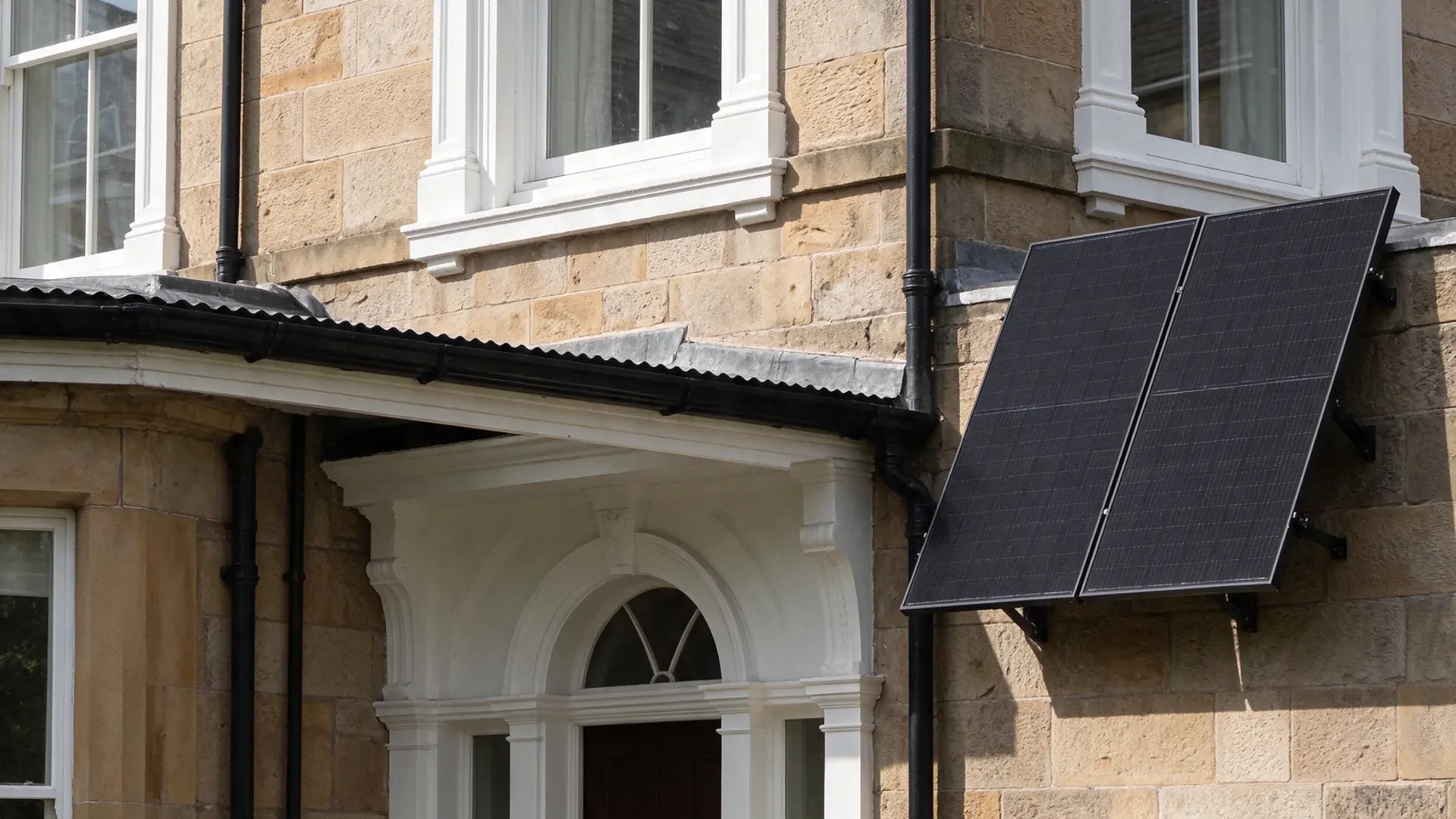
Solar panels alongside heating on a Scottish home02

Hybrid — heat pump plus existing boiler

What it is
An air source heat pump paired with your existing boiler. The pump handles the bulk of heating; the boiler kicks in during peak demand.
What the house must already be like
Suitable where the fabric is not yet good enough for a full heat pump, or where disruption needs to be kept low.
What it asks of you
Lower disruption than a full conversion. You keep the boiler as backup and the pump does the everyday work.
The trade-off nobody mentions
Two systems in the house. You maintain both, and you still burn gas or oil for part of the year.
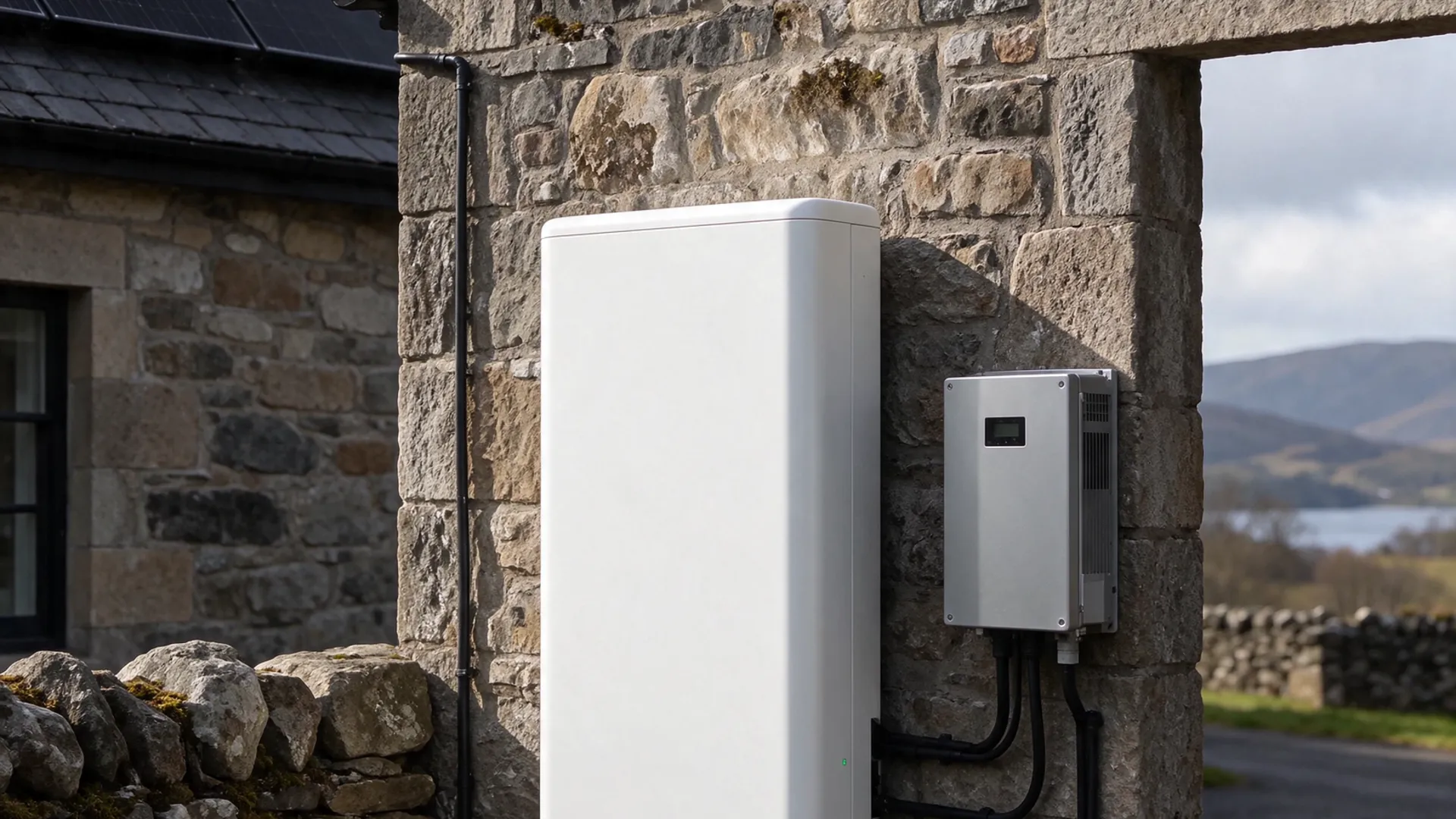
Battery storage unit fitted outside on a sheltered wall03

Modern electric heating

What it is
Direct-acting electric radiators or infrared panels. No wet system, no outdoor unit, no cylinder.
What the house must already be like
Works in any home electrically. Suited to smaller, well-insulated properties or rooms off the main system.
What it asks of you
Simple installation with minimal disruption. No pipes, no external unit, no water system to maintain.
The trade-off nobody mentions
Every unit of heat is bought at the electricity price. It pairs with solar and storage or it is expensive.
Well-insulated windows and fabric on a Scottish home04

Solar and battery alongside any of the above

What it is
Solar photovoltaic panels generating electricity, with a battery storing surplus for use when the sun is not shining.
What the house must already be like
Needs a suitable roof — orientation, pitch, and shading matter. Independent of the heating system choice.
What it asks of you
A separate decision from the heating system. It changes what your electricity costs, not how the house is heated.
The trade-off nobody mentions
It does not heat the house on its own. It is a separate decision and should be costed separately.

There is no option here without a trade-off. Anyone telling you otherwise is selling one of them.

Stone cottage with a modern air source heat pump outdoor unit
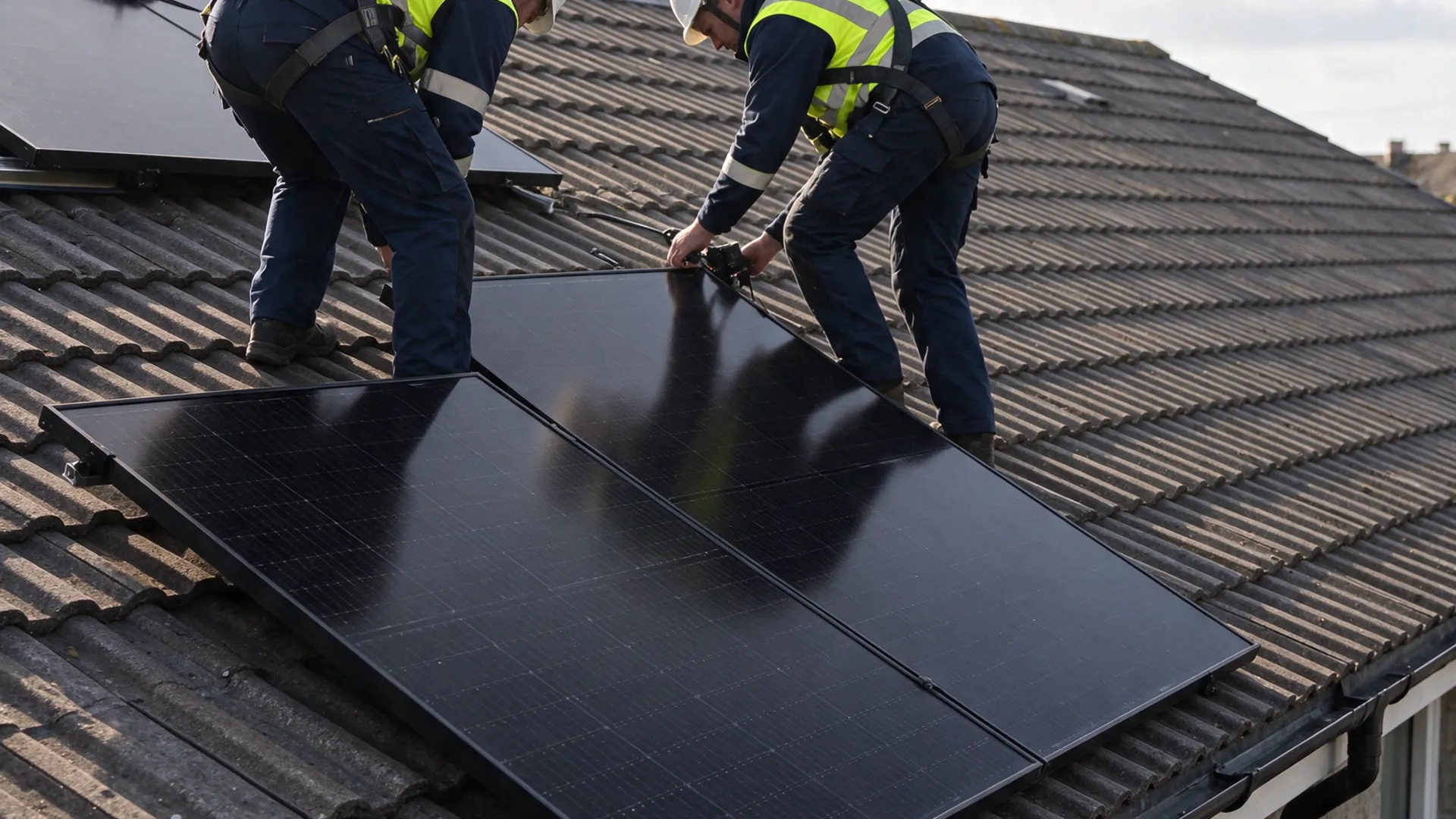
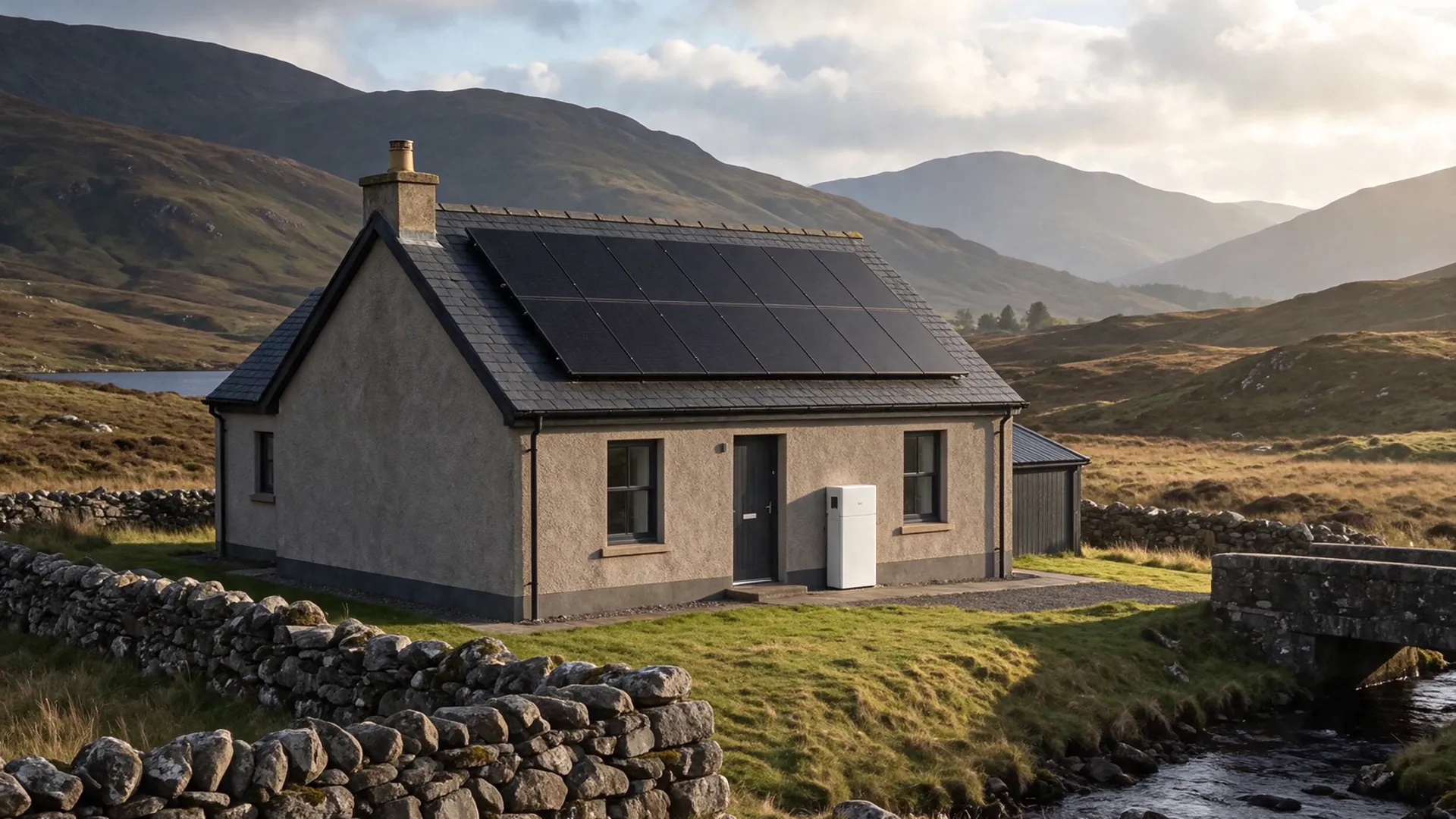
Black panels built for Scottish weather
Battery storage unit mounted on an external wall
Batteries fitted outside on a sheltered wall
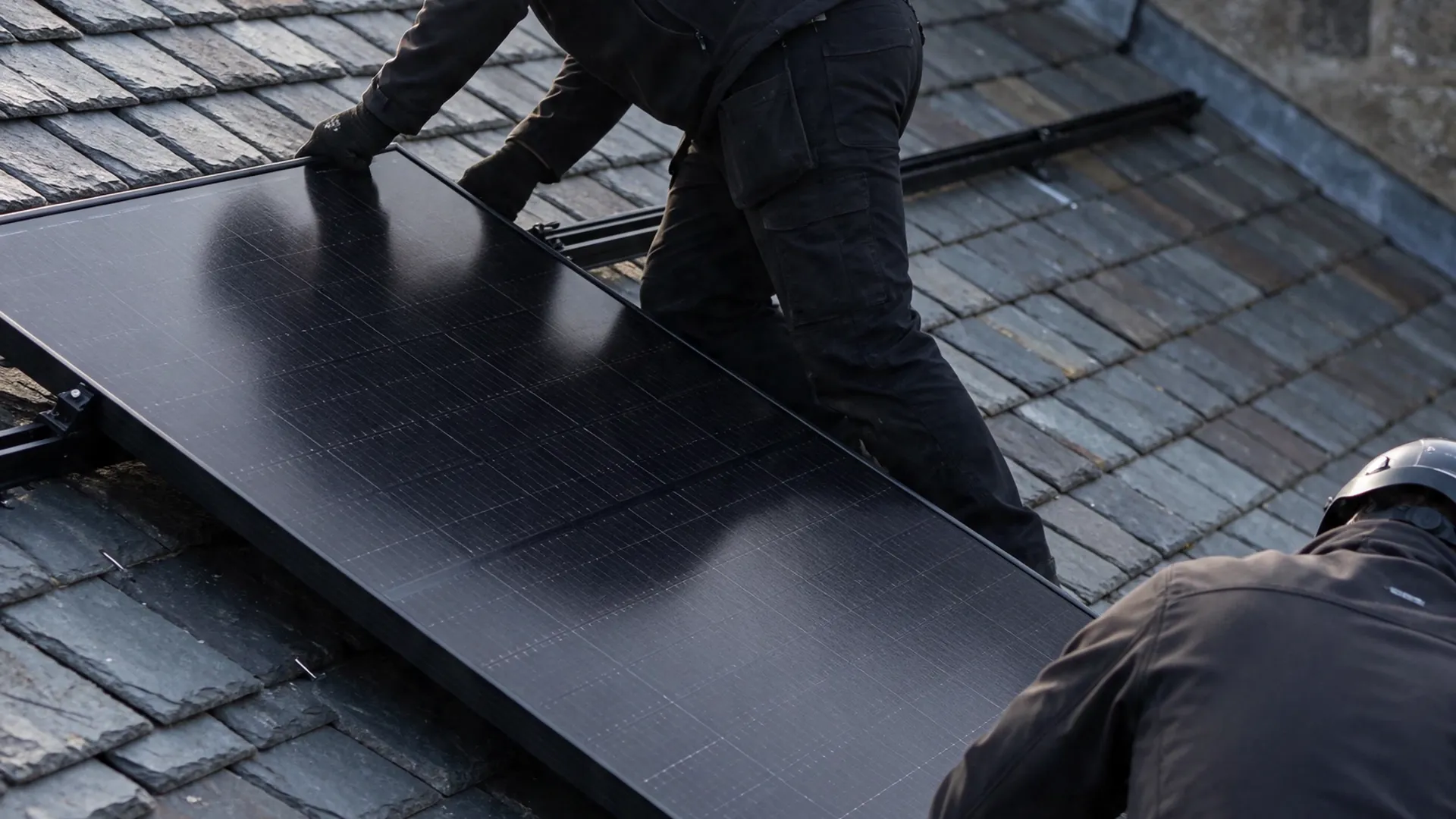
Heating installer working on a Scottish property
Installed through MCS-certified partners
How it works

How does the survey process work?

Three steps: you tell us about your home, we assess the options with a site visit and heat loss calculation, then you choose with every trade-off stated.

01

Tell us about your home

Fill in the survey with your postcode, property type, and monthly bill. That is enough to start a real conversation — no obligation, no call centre.

02

We assess your options

A surveyor visits, measures the rooms, checks the fabric, and runs a heat loss calculation. You get the options that genuinely fit your house, not a one-size-fits-all quote.

03

You choose with the trade-offs stated

Your quotation names the MCS-listed equipment, the total cost, and what each option asks of your home. You decide with the full picture, not a sales pitch.

Interest-free credit on every system

Spread the cost into fixed monthly payments. Free survey and an itemised quote before you decide anything.

What is included

What does the survey actually include?

A full assessment: heat loss calculation, options compared, MCS-listed equipment named on the quotation, and an honest view of your fabric.

  • A room-by-room heat loss calculation, not a guess
  • MCS-listed equipment, confirmed in writing on your quotation
  • Options compared against each other, not just against your current boiler
  • A clear statement of what each option asks of your home
  • An honest assessment of whether your fabric needs work first
  • A quotation you can compare line by line with any other installer
  • Scaffolding and all site work itemised — no surprise extras
  • We install through MCS-certified partners
The honest disqualifier

Should you not bother?

If your house has poor fabric, every option here performs worse and costs more. Insulation is the first job, and we will say so on the survey.

If the fabric of your house is poor, every option on this page performs worse and costs more to run. Insulation is not exciting and it is still the first job. We will say so on the survey rather than sell you the wrong thing twice.

A heat pump in a poorly insulated house is an expensive way to find out you needed insulation first. A survey that skips the fabric is not a survey — it is a sales call.

If you are coming from an old oil boiler, our sister site covers moving off oil to a heat pump across Scotland. If how you pay matters as much as what you pay, spreading the cost monthly with interest-free credit is explained on another site in the group. And for a wider look at replacing your boiler with low-carbon heating, that comparison sits there. Part of the Scottish Energy Efficiency network.

Heating installation team on site
Experienced teams, neat and tidy installs
Off-grid Scottish home with modern heating
Replacing oil heating
Itemised heating quotation document
Clear, itemised quotes to compare

Get a heating quote for your home

No obligation. A surveyor calls you back within one working day.

Business and farms

Low carbon heating for farms and businesses

Built for off-grid sites

Farms, estates and rural buildings moving off oil or LPG, with systems sized to the measured heat loss.

Larger buildings covered

Cascade heat pumps and hybrid heating for hotels, holiday lets, offices, schools and community halls.

Lower running costs

Solar PV and battery storage paired with the heating to cut the electricity you buy from the grid.

Five questions

What should I ask any installer before committing?

These five questions separate a real installer from a sales operation. Ask them of anyone who quotes to replace your heating system.

  1. 1What is your MCS certification number?
  2. 2Are you registered with a government-endorsed quality scheme?
  3. 3Is your guarantee insurance-backed, and does it survive if you cease trading?
  4. 4Is scaffolding included, or charged as an extra?
  5. 5Who actually carries out the installation, and are they the same company whose name is on the certificate?

Warmer homes, lower carbon, spread monthly

Free survey, itemised quote and interest-free credit available on every system.

Frequently asked

What do Scottish homeowners ask about low carbon heating?

What is a low carbon heating system?

A heating system that generates warmth with little or no direct fossil fuel combustion — air source heat pumps, hybrids, electric heating, or solar with storage.

In Scottish homes that means four categories: air source heat pumps, hybrid heat pumps, modern electric heating, and solar with battery storage. Each one replaces or reduces the gas, oil, or LPG boiler that most Scottish homes still rely on. The term covers a range of technologies, not a single product.

Do air source heat pumps work in Scotland?

Yes. Air source heat pumps work in Scotland down to well below freezing. The real question is your house, not the climate.

Heat pumps extract heat from outside air even at sub-zero temperatures. The performance depends on the fabric of your house — insulation, glazing, and airtightness — and on a proper room-by-room heat loss calculation. A pump sized correctly for a well-insulated Scottish home performs well. A pump dropped into a draughty house with no fabric work will cost more to run than the boiler it replaced.

How much does an air source heat pump cost in Scotland?

Costs vary widely depending on property size, fabric condition, and system design. Ranges only are quoted here, always with an illustrative caveat.

A confirmed price is given on your quotation after survey. The cost depends on the size of the property, the heat loss, the number of radiators or underfloor circuits, whether the hot water cylinder needs replacing, and the fabric work required. Any single figure quoted before a survey is a guess.

Is there a grant for heat pumps in Scotland?

The Boiler Upgrade Scheme is England and Wales only and does not apply in Scotland. Zero percent VAT on qualifying installations runs until March 2027.

The Boiler Upgrade Scheme is England and Wales only and does not apply in Scotland. Zero percent VAT on qualifying domestic installations runs until 31 March 2027 under HMRC rules. No grant amount is stated on this site, because grant landscapes change and a wrong figure is worse than none. Your surveyor can tell you what is current at the time of your survey.

What is a hybrid heat pump system?

A hybrid pairs an air source heat pump with your existing boiler. The pump handles everyday heating; the boiler covers peak demand.

The heat pump does most of the work across the year, and the existing boiler fires up only during the coldest days or when hot water demand spikes. This means lower disruption than a full conversion — you keep the boiler as backup. The trade-off is that you have two systems in the house to maintain, and you still burn gas or oil for part of the year.

Can I combine solar panels with a heat pump?

Yes. Solar and battery storage can be installed alongside any heating system. Solar does not heat the house — it changes electricity costs.

Solar photovoltaic panels generate electricity that can power your heat pump, your heating, or anything else in the house. A battery stores surplus for use when the sun is not shining. The Smart Export Guarantee pays roughly 4p to 25p per kWh for exported electricity, depending on supplier and tariff. Solar is a separate decision from the heating system and should be costed separately — it changes the economics of running a heat pump, but it is not a heating system in itself.

Is modern electric heating expensive to run?

Modern electric heating is simple with no outdoor unit, but every unit of heat is bought at the electricity price. It pairs with solar or it is expensive.

Direct-acting electric radiators or infrared panels are cheap to install and need no pipes, no outdoor unit, and no cylinder. The running cost is the issue: electricity is priced per unit, and every unit of heat costs what the electricity costs. In a well-insulated home with solar and battery storage, this can work. In a larger, draughtier property without solar, it is the most expensive option on this page.

Who actually installs the heating system?

We install through MCS-certified partners.

We install through MCS-certified partners. Ask any installer for their certification numbers and check them before you commit.
Reviewed by the Scottish Energy Efficiency team. Last updated: 28 October 2026.

Get a quote

Which low-carbon option fits your home?

Tell us six things about your home. A surveyor calls you back with the options that fit your house, with every trade-off stated.

By submitting this form you agree to be contacted by Low Carbon Heating Scotland about your enquiry. Low Carbon Heating Scotland is a trading name of Scot Energy Efficiency Ltd, company number 17408629, registered office 66 Paul Street, London EC2A 4NA.

See our privacy policy and cookie policy.

How much is the air source heat pump grant in Scotland?

The Home Energy Scotland Grant and Loan gives Scottish homeowners a grant of up to £7,500 for an air source heat pump (up to £9,000 for eligible rural and island homes), plus an optional interest-free loan of up to £7,500 repaid over up to 10 years.

Home Energy Scotland runs the scheme for the Scottish Government. We are independent and do not decide grants. Funding is limited and terms can change.

Get my free heating quote

We use cookies to understand how the site is used. See our cookie policy.